Category: Simplicity

  • We Are Not Going Away

    We Are Not Going Away

    For a long time, mobility was treated as a phase.

    Something you did when you were young.
    Something you did when you retired.
    Something you did when things went wrong and you were โ€œbetweenโ€ real lives.

    That framing is no longer true.

    A growing number of people are choosing – or being forced – to live outside permanent residential real estate. Not because they are irresponsible, broken, or hiding from society, but because the math no longer works. Rents are not coming down. Incomes are not going up. And spending more than half your lifeโ€™s energy just to stay indoors is a bad bargain.

    We are not a rounding error.
    We are not a temporary problem.
    We are a permanent demographic.

    And that changes everything.

    This Is Not About Hiding

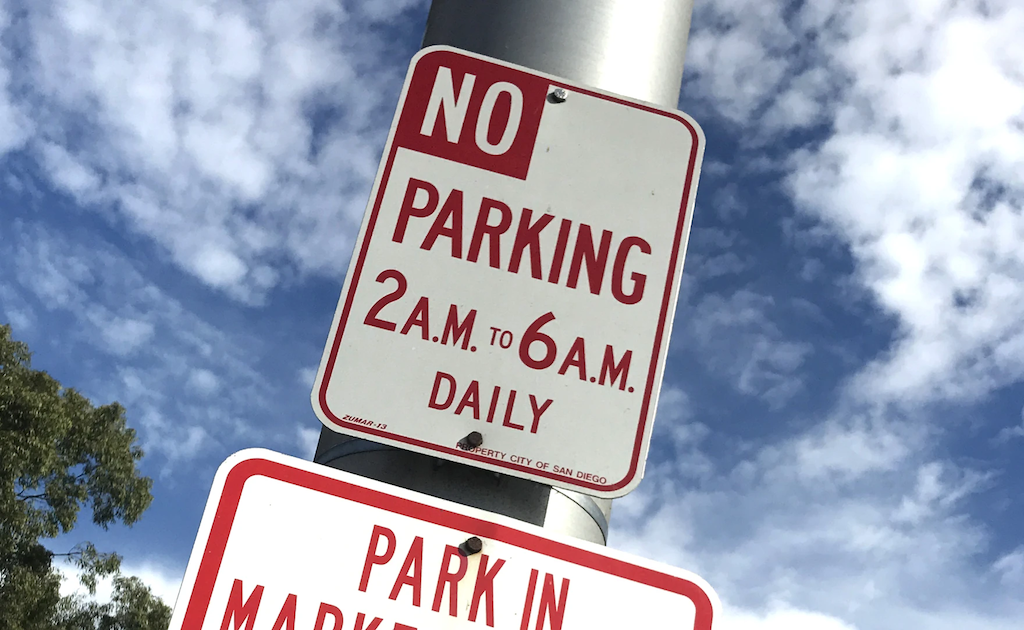
    There is a common assumption that people living in vehicles, RVs, boats, or other mobile dwellings are primarily concerned with staying invisible. With avoiding enforcement. With slipping through cracks.

    That assumption comes from an older reality.

    As this population grows, invisibility stops being viable – and stops being desirable. Jurisdictions will adapt not out of compassion, but out of necessity. Laws will change. Policies will be rewritten. Infrastructure will follow population, as it always does.

    This is not about evasion.
    It is about legitimacy.

    It is about coordination, representation, and agency for people who live differently but participate fully in work, commerce, and community.

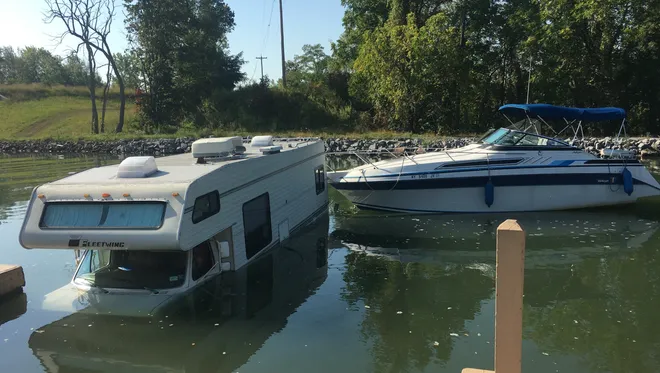
    A Yacht Is Just Another RV on the Water

    Mobility is not defined by income.
    It is defined by non-fixed habitation.

    A van, an RV, a boat, a car – these are not lifestyles. They are modalities. Different ways of solving the same problem: how to live without tying your existence to a single parcel of land.

    Historically, organizations like Escapees represented a legally clean, mostly retired population operating within well-understood systems. That world is changing. The new mobile population is broader, younger, more economically diverse, and far more integrated into modern work.

    The common thread is not wealth or scarcity.
    It is the decision to live outside the permanent housing market.

    What Elonara Is (and Is Not)

    Elonara is not a social network.
    It is not a lifestyle brand.
    It is not a safety net.
    And it is not a referee.

    Elonara is infrastructure.

    We provide tools for people to organize themselves: communities, events, conversations, commerce, and payment rails. We do not tell members how to behave. We do not police tone. We do not adjudicate disputes. We do not insert ourselves into transactions.

    Stripe already knows how to handle money disputes better than we ever could. Social friction is handled socially, the way it has always been handled in real communities: through boundaries, reputation, and exit.

    If someone annoys you, you block them.
    If a community doesnโ€™t fit, you leave.
    If someone behaves badly, people stop listening.

    We trust adults to manage their own boundaries.

    Circles, Not Feeds

    Modern platforms optimize for attention.
    Elonara optimizes for relevance.

    Circles filter noise.
    Communities provide context.
    Events create moments of coordination.

    There is no algorithmic feed deciding what matters. There is no invisible hand shaping behavior. What you see is determined by who you trust and where you choose to participate.

    This mirrors how real life works.

    Shared Prosperity, Not Extraction

    Commerce is not something we quarantine or hide. It happens everywhere people interact. In conversations. In recommendations. In events. In opportunities that arise naturally when people know each other.

    There is no โ€œseller classโ€ on Elonara.
    There are members.

    Any full member can host paid events. Any full member can offer goods or services. We give them the tools because prosperity inside the network strengthens the network itself.

    We take a cut when value is created, not when attention is harvested. Paid events are paid because real gatherings have real costs. If members prosper, the platform prospers with them.

    That is not exploitation.
    That is alignment.

    We Provide Tools, Not Rules

    Elonara does not decide what is acceptable speech.
    We do not decide what commerce is appropriate.
    We do not decide which disputes matter.

    We build the table.
    Members decide how to use it.

    That choice will repel people who expect platforms to act as parents, moderators, or moral authorities. It will attract people who want autonomy, responsibility, and real participation instead of performative engagement.

    We are comfortable with that tradeoff.

    This Is a Civic Shift, Not a Trend

    What is emerging is not a subculture. It is a new civic identity: people who live mobile lives and expect to be treated as legitimate participants in society.

    They work.
    They pay taxes.
    They organize.
    They trade.
    They gather.

    They are not going away.

    Elonara exists to help them do that – openly, honestly, and on their own terms.

    No feeds.
    No babysitting.
    No extraction.

    Just tools, trust, and shared prosperity.

  • A Course In Simplicity

    A Course In Simplicity

    Want to simplify your life?

    You’re not going to do this, but

    If you were serious in a perfect world, you would google “estate sale company <your city>”, call the first number, give them a key to your house and a piece of paper with an address to mail the check to. 

    Walk away. Don’t even pack a toothbrush. Don’t pack anything. Put on your favorite shirt and shoes and take a cab to the airport. Buy a ticket to the one place you have always wanted to go, check into a nice hotel when you get there and celebrate with a new toothbrush from the little shop in the lobby.

    You won’t miss a fucking thing.

    But you won’t do this. No one will. 

    So let’s take a step by step approach that you will do. The steps to get you to exactly the same place the previous strategy would get you. Free. Where you always dreamed of being.

    Step one. Make a plan to ignore everyone you love that is going to tell you you’re crazy.

    Step two. Get a magic box. You see, the second thing you need to do is prove you can do this. And a sure fire way to prove to yourself you can do this, is by doing something that is really easy but will produce results you can’t ignore. We are going to do this with a magic box.

    Walk around your home with your phone camera and make a video. Don’t clean up first. Don’t adjust the lighting or anything. Just pull out your phone right now, start recording and turn to the right. Stop recording when you get back here. Now file that video away somewhere you won’t lose it.

    We are going to come back and compare that video to your home in a couple months.

    Now get a magic box. You can be as simple or elaborate about this as your personality requires. Make a special trip to the nice gift shop and buy a super cute shabby chic toy chest or just grab a grocery bag from under the sink. Whatever works for you. And put it near the front door. 

    That’s it. Now you have a magic box.

    What’s the point of this, you may ask. Just watch. In a few minutes or days you will have something in your hands and realize in a flash you really don’t need the damn thing. Put it in the magic box. Now! Just put it in there and walk away. Do it again the next time you find yourself wondering where to put this thing you just picked up to make room for some other damn thing. Put them both in the magic box. Repeat.

    When the box is full, take it out to your car. The next time you are out grocery shopping or whatever, swing by Goodwill and empty your magic box. Go ahead and go inside. Hell, buy something if you must. You earned it!

    Do this again and again and after the fifth or tenth time, get out that video we made and play it back while you walk around your house.

    And congratulate yourself prodigiously on your progress, for you will have absolute proof you can do this. Look what you have already done!

  • Vanishing Freedom

    Vanishing Freedom

    The Vanishing Freedom of Mobile Living: A Global Perspective

    The American Dream of freedom on the open road is increasingly colliding with a wall of municipal ordinances and prohibitive costs. Having lived this mobile lifestyle since 2007 โ€“ in everything from sailboats to motorhomes, from tents to hotels, across the United States, Canada, Mexico, and Europe โ€“ I’ve witnessed firsthand the steady erosion of viable options for mobile living. What many don’t realize is that we’re facing a perfect storm: cities are criminalizing vehicle dwelling through selective enforcement, “safe” parking programs are missing the point of mobile living, and RV park rates have skyrocketed to match apartment costs โ€“ without any of the amenities or stability.

    A Global Perspective on a Growing Crisis

    The challenges facing mobile living aren’t unique to any one region. From the Pacific Northwest to the Mexican coastline, from Canadian provinces to European cities, the story remains disturbingly similar: traditional housing becomes increasingly unaffordable, people turn to mobile living solutions, and municipalities respond with restrictions that gradually eliminate these alternatives. As a member of the Escapees RV Club since 2007 (we identify ourselves by our “class year” in the community), I’ve watched this pattern repeat itself across borders and continents.

    The Forced Migration to Smaller Vehicles

    The systematic push toward ever-smaller mobile living spaces isn’t just about urban aesthetics โ€“ it’s about control. Cities have effectively outlawed living in larger vehicles, pushing people toward van life โ€“ only to then criminalize that option as well. This forced downsizing ignores a crucial reality: many people can afford and would prefer the comfort and stability of a larger RV. The current approach is creating pressure in a system that will eventually have to give.

    The Coming Showdown

    We’re approaching a critical inflection point. What happens when the growing population of van and car dwellers โ€“ people who downsized to remain “legal” โ€“ decide they’ve had enough? When they realize they can afford the comfort of a proper motorhome and choose to assert their right to park in public spaces? The brewing conflict between mobile residents and municipal authorities isn’t just probable โ€“ it’s inevitable.

    The current strategy of pushing people into increasingly smaller spaces while eliminating legal parking options is unsustainable. We’re looking at a future where well-resourced, organized communities of RV owners might simply refuse to comply with parking restrictions en masse. The question isn’t if these showdowns will occur, but when and where they’ll begin.

    Beyond “Safe” Parking Programs

    The fundamental disconnect between policy makers and the mobile living community becomes clear in the implementation of “safe” parking programs. These initiatives, while well-intentioned, miss the essential nature of mobile living: the freedom to move. Having experienced various living arrangements across multiple countries โ€“ from tents to Airbnbs, from sailboats to RVs โ€“ I can attest that the ability to relocate at will isn’t just a luxury, it’s often a necessity for work, weather, or personal preference.

    The Economics of Exclusion

    The cost structure of RV parks has become particularly perverse. What began as an affordable housing alternative has evolved into a system that often matches or exceeds traditional rental costs. This pricing isn’t just about market forces โ€“ it’s effectively creating an economic barrier to mobile living, pushing people toward even less stable alternatives.

    Looking Forward: The Need for New Solutions

    After nearly two decades of mobile living across multiple countries, I’ve seen both the best and worst of how communities handle alternative living arrangements. Some European cities have managed to integrate mobile communities successfully, while others have taken increasingly hostile stances. The lessons from these varied approaches suggest that solutions exist, but they require a fundamental shift in how we think about housing and community rights.

    The coming years will likely see increasing tension between mobile residents and municipal authorities. As someone who’s witnessed the evolution of this lifestyle since 2007, I believe we’re approaching a tipping point where the community will need to organize and advocate for systemic change.

    A Call to Action

    While the path forward isn’t entirely clear, several key actions could help address these mounting pressures:

    1. Document and share our experiences โ€“ both successful and challenging โ€“ to build a comprehensive picture of the situation
    2. Form coalitions between various mobile living groups (van dwellers, RV owners, sailors) to create a unified voice
    3. Engage with local planning committees before restrictions are enacted rather than after
    4. Study and share successful models from other countries where mobile living has been better integrated into urban planning

    The freedom to choose how and where we live isn’t just about RVs or vans โ€“ it’s about preserving one of the last vestiges of personal liberty in an increasingly regulated world. The perfect storm we’re facing demands a response, but that response must come from within our community first.


    Lonn Holiday has been living the mobile lifestyle since 2007, experiencing various forms of alternative living across North America and Europe. From sailboats on the Salish Sea to motorhomes in the greater Seattle area, from tents in Mexico to hotels across Europe, he brings a global perspective to the challenges facing the mobile living community.