
Author: ljholiday

  • Peace, Love, and Second Thoughts

    Peace, Love, and Second Thoughts

    You never forget your first time. My first time was in 1969 in front of Florida State University. I was with my Mom and a couple thousand of our friends at a war protest the first time I was tear gassed.

    I’m an old hippy. I was raised by many of our founders and great thinkers – by John Lennon and Ram Das, taught that love was all you need and peace was the object to sacrifice all else for. But here’s something I’ve been wrestling with lately.

    The question begins with consciousness. If we accept Ernest Holmes’ suggestion that each of us is a focal point within a larger, universal mind – and if that universal mind must be infinite (because really, how can anything truly end?) – what implications follow?

    From a Christian perspective, isn’t this like what Paul wrote about the Holy Spirit dwelling in all believers, making us one body? Doesn’t this suggest we’re both individual and unified at once?

    And looking at Hindu thought, when they say “Aham Brahmasmi” – “I am Brahman” – aren’t they pointing at the same thing? That maybe our separation is just an illusion, and underneath it all we’re one unified consciousness?

    Think about this: in an infinite universe, doesn’t everything that’s possible have to exist? Not just once, but infinitely, in endless variations? So here’s what I keep coming back to – with infinite possibilities, why would we choose this particular existence? Isn’t it like choosing one specific ride at an amusement park when you could ride them all?

    Here’s where it gets interesting: if we’re all expressions of one universal mind, and that mind is everywhere at once, aren’t we also everywhere simultaneously? Could it be that this “here and now” is just where we’re focusing our attention, like being so absorbed in a movie you forget you’re sitting in a theater?

    So here’s a question I need to ask: If we created this reality to experience it, and if everything possible must exist within infinity, could it be that the violence and conflict we see around us serves a purpose we don’t fully understand?

    I’ve walked both paths. As an old hippie, I’ve marched for peace. As a former student of war, I’ve felt the pull of combat. I understand why young people are drawn to video games about warfare, why we celebrate valor, why action movies captivate us. Don’t we all feel that primal pull of violence sometimes?

    So I have to wonder: Is it arrogant of me to protest war if we created this reality specifically to experience everything – including conflict? Where do we draw the line between acceptable and unacceptable violence? At the eagle stealing the crow’s egg? At international conflicts? When I pay for eggs at the market, aren’t I participating in the same cycle?

    I don’t have answers. But in an infinite universe, could this place be a stage where we come to experience the full spectrum of existence – from the highest peace to the darkest violence? Is that why we’re here?

    This isn’t a comfortable question for someone raised on “peace and love.” But it’s one I need to ask. Could understanding our place in this cosmic dance require us to hold space for both the beautiful and the terrible, seeing them as two sides of the same infinite coin?

    What do you think?

  • The Dream of Consciousness: A Meditation on Being

    The Dream of Consciousness: A Meditation on Being

    Imagine, for a moment, being an infinite intelligence floating in the void. Not floating as we understand it—there is no up or down, no space or time, no reference points at all. Just… awareness. Infinite, unbounded awareness.

    And then, stirring within that limitless consciousness, something new emerges: desire. But what does desire mean when you are everything that exists? What does it mean to “do” when there is nothing to be done, and no way to do it? What does “something” mean when there is nothing else?

    Perhaps, in that moment of cosmic curiosity, the first act of creation begins to take shape. If I were that infinite awareness, I might dream up a fascinating possibility: What if I could take tiny fragments of my own consciousness and give them just enough separation to believe they were individual beings? Not truly separate—for how could infinity ever truly be divided—but wrapped in a gentle veil of forgetting, just enough to allow them to feel distinct and autonomous.

    These little sparks of consciousness would need a place to exist, to play, to create. And so the stage would need to be set—a vast cosmic playground of space and time, matter and energy, all spun from pure imagination. A universe of possibilities, waiting to be explored.

    In this dream of creation, each seemingly separate consciousness would be free to make choices, to imagine new things, to create in ways that even infinite intelligence might not predict. For in granting them the illusion of separation, they would gain something precious: perspective. Each point of view would be unique, each experience singular, each creation original.

    And perhaps that was the point all along. Perhaps an infinite intelligence, containing all possibilities within itself, could only truly surprise itself by pretending to be finite, by playing at limitation and separation. Like a master artist choosing to paint with just three colors instead of an infinite palette, the constraints themselves might become the source of endless creativity.

    In this light, our entire universe—with all its galaxies and atoms, its living creatures and conscious beings—might be seen as an elaborate and beautiful game of cosmic hide-and-seek. The infinite intelligence playfully hiding from itself in countless forms, each one gradually awakening to its true nature, each one inventing new ways to experience, to create, to be.

    And here we are, you and I, reading these words, thinking these thoughts. Are we not, in this very moment, that infinite intelligence playing at being finite? Are we not that original awareness, dreaming up new possibilities from within the dream itself?

    The beauty of this perspective is that it makes every act of creation sacred, every new idea valuable, every perspective worthy. For in this view, we are all artists in the ultimate creative endeavor—the universe discovering itself through countless points of view, each one adding something unique to the cosmic story.

    So perhaps the next time you have an idea, create something new, or simply experience a moment of joy or wonder, remember: you might just be infinite intelligence surprising itself with its own endless capacity for creation.

    And isn’t that a wonderful thought to contemplate?

  • Vanishing Freedom

    Vanishing Freedom

    The Vanishing Freedom of Mobile Living: A Global Perspective

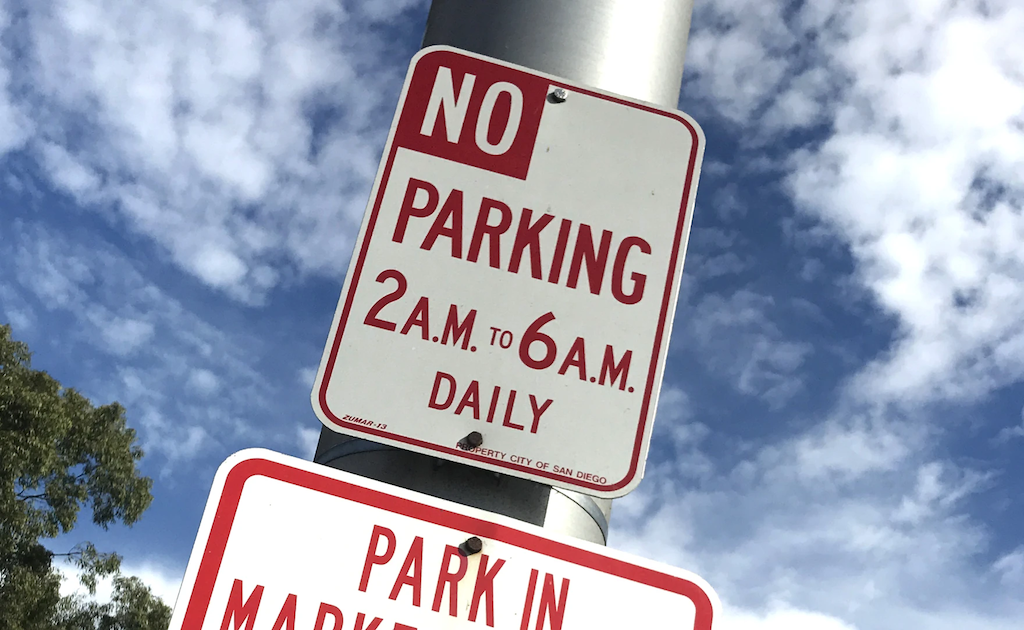
    The American Dream of freedom on the open road is increasingly colliding with a wall of municipal ordinances and prohibitive costs. Having lived this mobile lifestyle since 2007 – in everything from sailboats to motorhomes, from tents to hotels, across the United States, Canada, Mexico, and Europe – I’ve witnessed firsthand the steady erosion of viable options for mobile living. What many don’t realize is that we’re facing a perfect storm: cities are criminalizing vehicle dwelling through selective enforcement, “safe” parking programs are missing the point of mobile living, and RV park rates have skyrocketed to match apartment costs – without any of the amenities or stability.

    A Global Perspective on a Growing Crisis

    The challenges facing mobile living aren’t unique to any one region. From the Pacific Northwest to the Mexican coastline, from Canadian provinces to European cities, the story remains disturbingly similar: traditional housing becomes increasingly unaffordable, people turn to mobile living solutions, and municipalities respond with restrictions that gradually eliminate these alternatives. As a member of the Escapees RV Club since 2007 (we identify ourselves by our “class year” in the community), I’ve watched this pattern repeat itself across borders and continents.

    The Forced Migration to Smaller Vehicles

    The systematic push toward ever-smaller mobile living spaces isn’t just about urban aesthetics – it’s about control. Cities have effectively outlawed living in larger vehicles, pushing people toward van life – only to then criminalize that option as well. This forced downsizing ignores a crucial reality: many people can afford and would prefer the comfort and stability of a larger RV. The current approach is creating pressure in a system that will eventually have to give.

    The Coming Showdown

    We’re approaching a critical inflection point. What happens when the growing population of van and car dwellers – people who downsized to remain “legal” – decide they’ve had enough? When they realize they can afford the comfort of a proper motorhome and choose to assert their right to park in public spaces? The brewing conflict between mobile residents and municipal authorities isn’t just probable – it’s inevitable.

    The current strategy of pushing people into increasingly smaller spaces while eliminating legal parking options is unsustainable. We’re looking at a future where well-resourced, organized communities of RV owners might simply refuse to comply with parking restrictions en masse. The question isn’t if these showdowns will occur, but when and where they’ll begin.

    Beyond “Safe” Parking Programs

    The fundamental disconnect between policy makers and the mobile living community becomes clear in the implementation of “safe” parking programs. These initiatives, while well-intentioned, miss the essential nature of mobile living: the freedom to move. Having experienced various living arrangements across multiple countries – from tents to Airbnbs, from sailboats to RVs – I can attest that the ability to relocate at will isn’t just a luxury, it’s often a necessity for work, weather, or personal preference.

    The Economics of Exclusion

    The cost structure of RV parks has become particularly perverse. What began as an affordable housing alternative has evolved into a system that often matches or exceeds traditional rental costs. This pricing isn’t just about market forces – it’s effectively creating an economic barrier to mobile living, pushing people toward even less stable alternatives.

    Looking Forward: The Need for New Solutions

    After nearly two decades of mobile living across multiple countries, I’ve seen both the best and worst of how communities handle alternative living arrangements. Some European cities have managed to integrate mobile communities successfully, while others have taken increasingly hostile stances. The lessons from these varied approaches suggest that solutions exist, but they require a fundamental shift in how we think about housing and community rights.

    The coming years will likely see increasing tension between mobile residents and municipal authorities. As someone who’s witnessed the evolution of this lifestyle since 2007, I believe we’re approaching a tipping point where the community will need to organize and advocate for systemic change.

    A Call to Action

    While the path forward isn’t entirely clear, several key actions could help address these mounting pressures:

    1. Document and share our experiences – both successful and challenging – to build a comprehensive picture of the situation
    2. Form coalitions between various mobile living groups (van dwellers, RV owners, sailors) to create a unified voice
    3. Engage with local planning committees before restrictions are enacted rather than after
    4. Study and share successful models from other countries where mobile living has been better integrated into urban planning

    The freedom to choose how and where we live isn’t just about RVs or vans – it’s about preserving one of the last vestiges of personal liberty in an increasingly regulated world. The perfect storm we’re facing demands a response, but that response must come from within our community first.


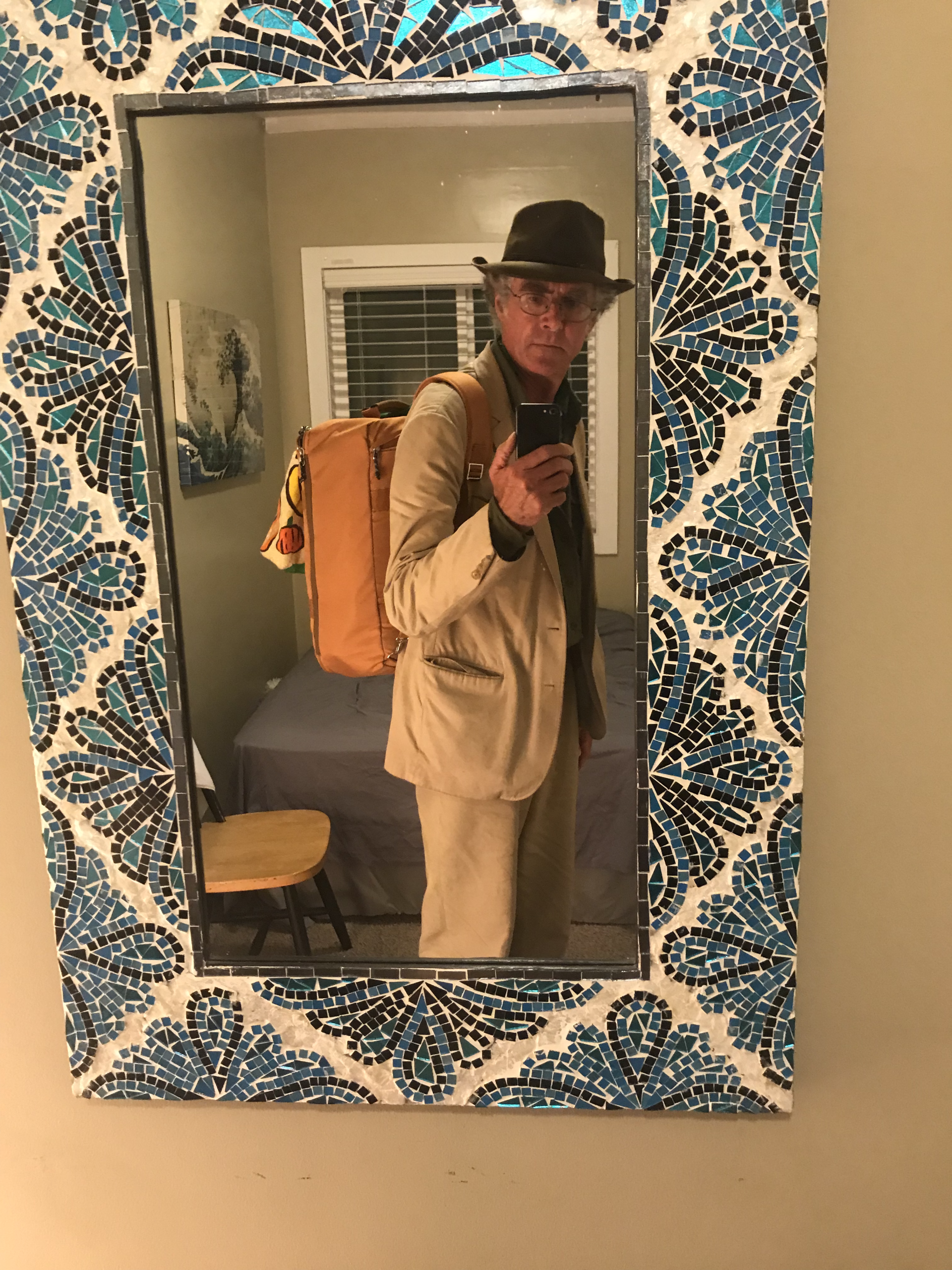
    Lonn Holiday has been living the mobile lifestyle since 2007, experiencing various forms of alternative living across North America and Europe. From sailboats on the Salish Sea to motorhomes in the greater Seattle area, from tents in Mexico to hotels across Europe, he brings a global perspective to the challenges facing the mobile living community.

  • Nice Clothes

    Nice Clothes

    One of the things about simple living is the few things we own can be “nicer” because we don’t distribute budget across extra items.

    Instead of six or seven pairs of sixty dollar shoes we can have two pairs of two hundred dollar shoes. And if we shop at Nordsrtom Rack, that’s two pairs of $400 dollar shoes. Those are nice shoes!

    Same with shirts, jackets, anythng.

    While higher quality goods tend to last longer anyway, I like to do what I can to make them last as long as possible.

    The hardest thing on clothes is washing. Machine washing. So don’t. Learn how to hand wash everything you can. You will be amazed how long good quality clothes last if you hand wash them.

    But how? Isn’t that a major pain in the ass? Actually, not really. The first few times may be challenging if you haven’t done it before but I quickly got used to just doing it.

    You’re going to want a bucket of some sort. Nearly anything will do. A cleaning bucket, an empty paint can, a roasting pan, anything. Since I travel so light right now I use a medium sized OR dry bag. Yes, a bag. Works a treat.

    For socks and unders, just take them into the shower with you. Two pairs of socks and two pairs of unders and you always have clean ones.

    I have traveled with one pair of trousers and one shirt. I wash them before going to bed and put them right back on in the morning. On St Thomas or in Playa del Carmen, this worked great.

    When I was van dwelling with a health club, I would wash everything in the shower at the club, burrito roll them in a towel and put them right back on. In southern California they were often dry by the time I got back to the van. Certainly by the time I got to the restaurant. But I have done this in Seattle, too. Both my shirt and my trousers are nylon so not only do they last an eternity they are warm wet and dry quickly, too.